Roof windows last a long time, but not forever. Seals perish, hinges wear, glazing units fail and timber ages. At some point, many homeowners face the same decision: keep repairing the window, or replace it. Replacement is a bigger job than a repair, and it is worth understanding the process, the options and the rules before you commit.
This guide explains the signs that a Velux window is due for replacement, how to identify the one you have, the choices available when you replace, the regulations that apply in England, and how to judge a quote. It is written for homeowners in Newcastle, Blaydon-on-Tyne and the wider North East, though most of it applies across the UK.
Signs it may be time to replace
One fault rarely justifies a new window. A pattern of faults usually does. Look for combinations of these signs:
- Misting or moisture between the panes. This means the sealed glazing unit has failed. The unit cannot be dried out or resealed, so it needs replacing. Sometimes only the glazing is needed, sometimes the whole window is the better choice.
- Rot or softening of the timber frame. Pine frames are protected by a finish, but long exposure to water, especially from persistent condensation or leaks, can damage them. Poking a screwdriver tip gently into suspicious areas will show whether the wood is soft.
- Repeated leaks. If the flashing has been repaired more than once and the water keeps returning, the underlying fit may be unsuitable.
- A sash that sticks, sags or will not seal. Worn hinges, distorted frames or damaged seals can make the window hard to operate and draughty.
- A failing electric motor or controls on an older window. Electric windows have parts that wear out. Motors and gas springs are generally expected to need replacement within around ten years of regular use.
- A cracked pane or damaged sash. Impact damage to glass, or a bent sash, often costs more to repair than the value of the old window.
- Cold, draughty rooms. Older glazing is less thermally efficient than modern units.
- Parts that are no longer available. Some older models and sizes may no longer be supported, so a repair is not possible even if you want one.
A specialist can help you weigh these up. If the problem is limited, for example a worn handle, a repair is almost always better. If the window is old, has several faults and is failing at the frame, replacement is the more sensible investment.
First step: identify what you have
To replace like for like, or to choose a suitable upgrade, you need the model code. Velux windows carry a type sign, a small label, usually found on the side of the frame behind the ventilation flap, or on the inside of the sash.
A typical code looks like GGL MK04. Reading it:
- G at the start means a standard window.
- The second letter is G for centre-pivot or P for top-hung.
- The third letter is L for pine (lacquered) or U for polyurethane (white finish).
- The size code, for example MK04, gives the frame dimensions.
- Following digits describe the finish, glazing and any electrical features.
Take a clear photograph of the label and of the window from inside and outside. If the label is missing, a surveyor can measure the existing opening and identify the model by its design. Measuring yourself is possible but easy to get wrong. The frame size, not the visible glass, is what matters, and it is best confirmed during a survey.
Replacement in the existing opening, or something different?
There are three broad routes.
- Like-for-like replacement. The new window is the same size and type as the old one, fitted into the existing opening. This is the simplest and often the most cost-effective route. The roof structure is not altered, and the internal and external finishes can usually be reused with minimal making good. A straightforward Velux window replacement like this is often the best value when the rest of the window is sound.
- Upgrade within the same opening. You keep the opening but change the specification. Examples include changing from pine to a white polyurethane finish for a damp-prone bathroom, choosing a different glazing option, switching from manual to electric or solar operation, or choosing a different opening type.
- A different size or position. Enlarging or moving the opening affects the roof structure. This needs a structural assessment and a Building Regulations application. It is a larger project, and the price and timescale change accordingly.
The most common choice is the first or second. Many homeowners find the upgrade route appealing, because replacement is the natural moment to fix long-standing annoyances.
Choosing the right type of window
Velux offers several operating types and a range of roof window products. The main choices include:
- Centre-pivot windows. The sash pivots around its middle. These are very common, easy to clean from inside and suit most pitched roofs.
- Top-hung windows. The sash hinges at the top and opens outwards, giving more headroom and a better view at the opening position. They often suit lower roof pitches or rooms where you want unobstructed views.
- Flat roof windows. Designed for low or flat roofs, with specific flashing and upstand requirements. These need particular care at the roof junction.
- Electric and solar windows. These open and close by remote or sensor control, which is helpful for hard-to-reach windows. Solar models avoid the need for mains wiring to the window.
- Fixed windows. For light only, with no opening part.
- Sun tunnels. For rooms without a roof window position, such as hallways and some bathrooms.
- Balcony and terrace systems. Combining a roof window and a lower fixed element for a more open feel.
Which suits you depends on the room’s purpose, the pitch of the roof, the view and how often you want to open it. A survey is the proper moment to decide.
Glazing: what to think about
Glazing affects comfort, noise and safety, and it is one of the most useful areas to upgrade at replacement. Points to consider:
- Thermal performance. Modern double and triple glazed units insulate better than older ones, reducing heat loss and cold spots on the glass. This is particularly relevant in North East winters and in bedrooms or home offices.
- Noise reduction. If you live near a main road, a school or a railway, or if rain noise on the roof glass bothers you, ask about acoustic options.
- Safety. Laminated or toughened glass options exist. Your installer can advise on what is appropriate for the room and position.
- Solar control and glare. Roof windows facing south can bring significant heat in summer. Blinds, shutters or awnings help, and some glazing options are designed to reduce heat gain.
- Ease of cleaning. Some glass finishes are designed to shed dirt more easily. Ask what is available for the model you choose.
Avoid choosing purely by label. Ask the installer to explain, in plain language, what each option does for your room.
The flashing: do not reuse the old one blindly
When a window is replaced, the flashing around it should be considered as part of the job. The flashing is matched to the roof covering, such as slate, plain tile or profiled tile, and to the window size. Reusing old flashing can be false economy: it may be corroded, bent or the wrong type for the current roof covering, especially if the roof has been re-covered since the original window was fitted.
A good replacement includes a fresh flashing kit that suits the roof covering, correctly dressed into the tiles, plus a new insulation collar and underlay detail where appropriate. These items are low in cost compared with the window and high in importance to the weatherproofing.
Loft conversions and escape windows
If the window serves a loft bedroom on a second storey, fire safety rules may apply. Under Approved Document B, an escape window generally needs:
- A clear opening area of at least 0.33 square metres
- A minimum clear width of 450mm and a minimum clear height of 450mm
- A bottom edge no more than 1,100mm above the floor
An escape window may not be needed if the stairwell is protected. Whether the rules apply to you depends on the layout of your home, so confirm with your installer or building control. When replacing a window that currently serves as an escape route, do not choose a model that makes the opening smaller or the sill higher without checking compliance.
Planning permission and Building Regulations
Planning. Replacing a roof window like for like generally does not need planning permission for houses. For new roof lights, the general rule in England is that they should not protrude more than 150mm from the roof plane and should be no higher than the highest part of the roof. In a side elevation, extra conditions apply: obscure glazing, and either non-opening or opening parts more than 1.7m above the floor. Flats, listed buildings and conservation areas have their own rules, so check with your council first. This matters across much of Newcastle and the Tyne area, where conservation areas and older buildings are common.
What drives the cost
No honest article can give you a single price for a Velux window replacement, because the cost depends on factors specific to your home. The main ones are:
- Window type and size. Larger windows, flat roof windows and electric or solar models cost more than basic manual models.
- Glazing specification. Higher performance and specialist glass add to the price.
- Roof covering and flashing. Different coverings need different kits and different labour.
- Access. Scaffolding, a tower or roof access equipment may be needed. The height and layout of the building affect this.
- Internal work. Lining, plastering, decorating and making good vary from job to job.
- Number of windows. Fitting several windows at once is often more efficient than separate visits.
- Extras. Blinds, shutters, awnings and rain sensors are priced separately.
- Structural work. Changing the opening size needs additional work and possibly engineering input.
For that reason, a reliable price comes only after a survey. At SkylightsUK, every job begins with a survey and a quote, so the figure is based on your actual roof and window rather than an estimate over the phone.
What happens on the day
Knowing what to expect makes the day far less stressful.
- Preparation. The installer protects floors and furniture and clears the area beneath the window. You should move items away in advance.
- Access. Scaffolding or access equipment is set up if needed.
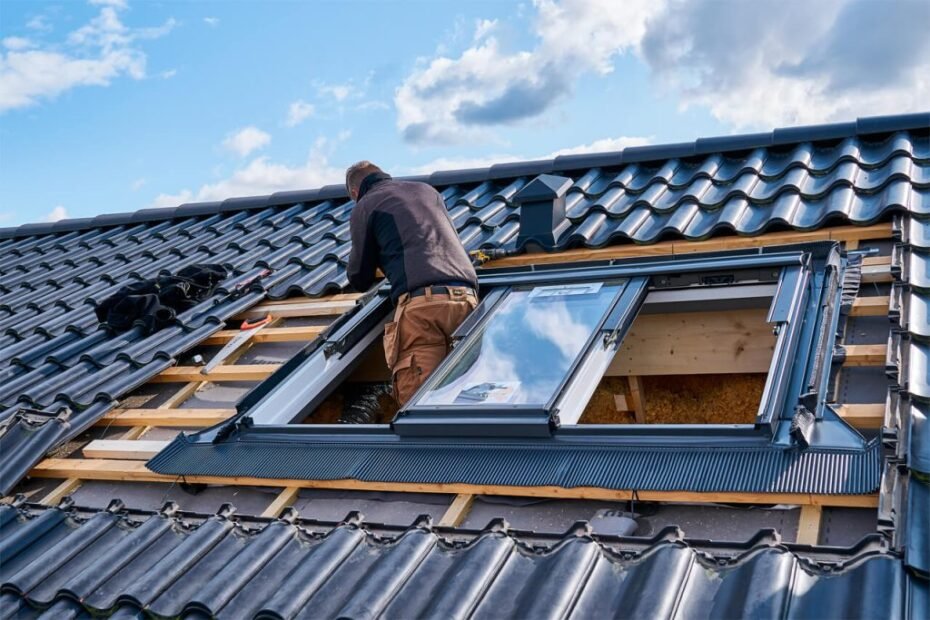
- Removal. The old window is taken out, and the surrounding area is inspected for damage or rot.
- Fitting. The new frame is fixed into place, the insulation collar and underlay are fitted, and the flashing is dressed into the roof covering.
- Weathertight check. The installer confirms the window is sealed against the weather before moving on. A responsible installer does not leave a roof open overnight.
- Internal finishing. The lining and any plasterwork are completed, and the sash is fitted and adjusted.
- Handover. The installer demonstrates how to operate the window, including the ventilation flap and any electrical controls, and explains cleaning and care.
- Clear-up. Waste is removed, and the area is left tidy.
A single window replacement in an existing opening is often completed within a day, but the timescale depends on the roof, the weather and the extent of finishing work. Your installer should give a realistic estimate after the survey.
Guarantees after replacement
A new Velux roof window comes with the manufacturer’s guarantee, which is 10 years for roof windows, with shorter periods for electrical parts, blinds and shutters. The installer provides a separate guarantee on workmanship. Skylights UK gives a 1 year workmanship guarantee, alongside the 10 year Velux product guarantee on eligible windows.
The two work together. If a glazing unit fails within the product period, that is a manufacturer matter. If the flashing leaks because of how it was fitted, that falls to the installer. Keep your invoice, quote, model code and the installation date together.
Registering electric and solar products where Velux allows it can extend some electrical guarantees, so ask your installer whether registration applies to your window.
Getting the best from your new window
After replacement, a few simple habits help you get the full life from the new unit:
- Use the ventilation flap and open the window regularly to control condensation.
- Clean glass by wetting it first, then wiping, and avoid abrasive or chemical cleaners and silicone products.
- Wash the air filter as recommended.
- Clear gutters and check the roof around the window once a year.
- Keep the type sign information and paperwork somewhere safe.
If something does go wrong, early attention is always cheaper. The same principles that apply to maintenance apply here.
Replacement or repair: a quick decision guide
| Situation | Usually best option |
| Worn handle, seal or hinge on a window under ten years old | Repair |
| Misting between panes, frame otherwise sound | Replace the glazing or the window, depending on model |
| Rotten timber frame | Replace |
| Several faults on an old window | Replace |
| Leak traced to flashing only | Repair or replace flashing |
| Window cannot be sourced for parts | Replace |
| Planning a re-roof or loft conversion | Consider replacing at the same time |
| Electric motor failing on a decade-old window | Repair parts or replace, depending on model and condition |
Why the installer is part of the decision
A replacement is only as good as its installation. The new window will perform exactly as designed only if the frame is square and secure, the flashing is correctly dressed and the insulation and lining are done properly. That is why the installer’s experience matters. A team that works only with Velux has the advantage of seeing the same products and the same issues repeatedly.
If you are comparing quotes, look beyond the headline price. Check that each quote names the same model and glazing, includes new flashing, covers access and making good, states the guarantee and explains how regulations will be handled. Two quotes that look different may be pricing very different jobs.
Frequently asked questions
Can I replace just the glass?
Sometimes. If the frame and sash are sound and the model is supported, a replacement glazing unit may be possible. A survey will confirm.
Will the new window fit my old opening?
If you choose the same size, yes. The type sign shows the size code, and a survey confirms exact dimensions.
Do I have to change the flashing?
It is strongly recommended. Old flashing may be damaged or unsuitable for the current roof covering.
How long will replacement take?
A single like-for-like replacement is often a one day job, but this depends on access, weather and finishing work.
Will replacement make my room warmer?
Modern glazing generally insulates better than older units, which can reduce cold spots and heat loss. Actual results depend on the room and the old and new specifications.
Can I add blinds at the same time?
Yes, and it is often sensible to do so. Blinds, shutters and awnings are matched to the window model.
Do I need permission?
Usually no planning permission for a like-for-like replacement on a house, but Building Regulations must be satisfied, and conservation areas, listed buildings and flats have special rules.